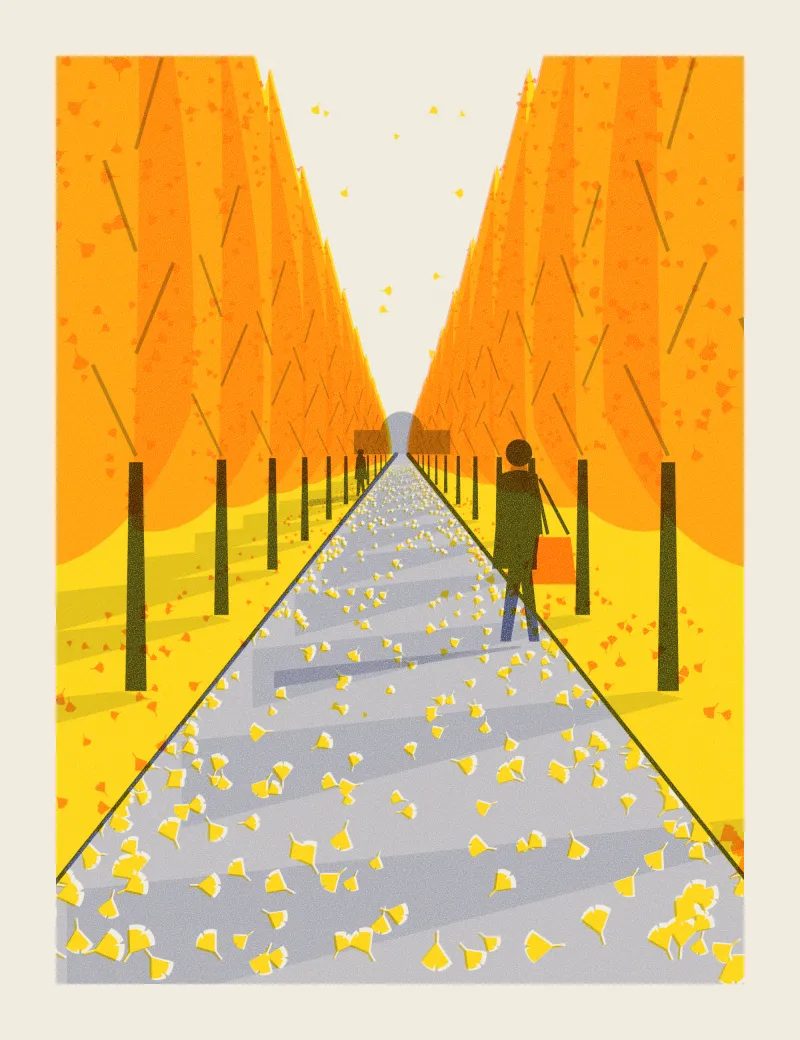
A risograph is a stencil duplicator: it burns a design into a thin master sheet, wraps the master around a drum full of ink, and pushes ink through the tiny holes onto paper, one colour per pass. Our machine is a secondhand single-drum model from the 1990s. Here is Ginkgo, our autumn print, from drawing to signed sheet.
1. One drawing per ink
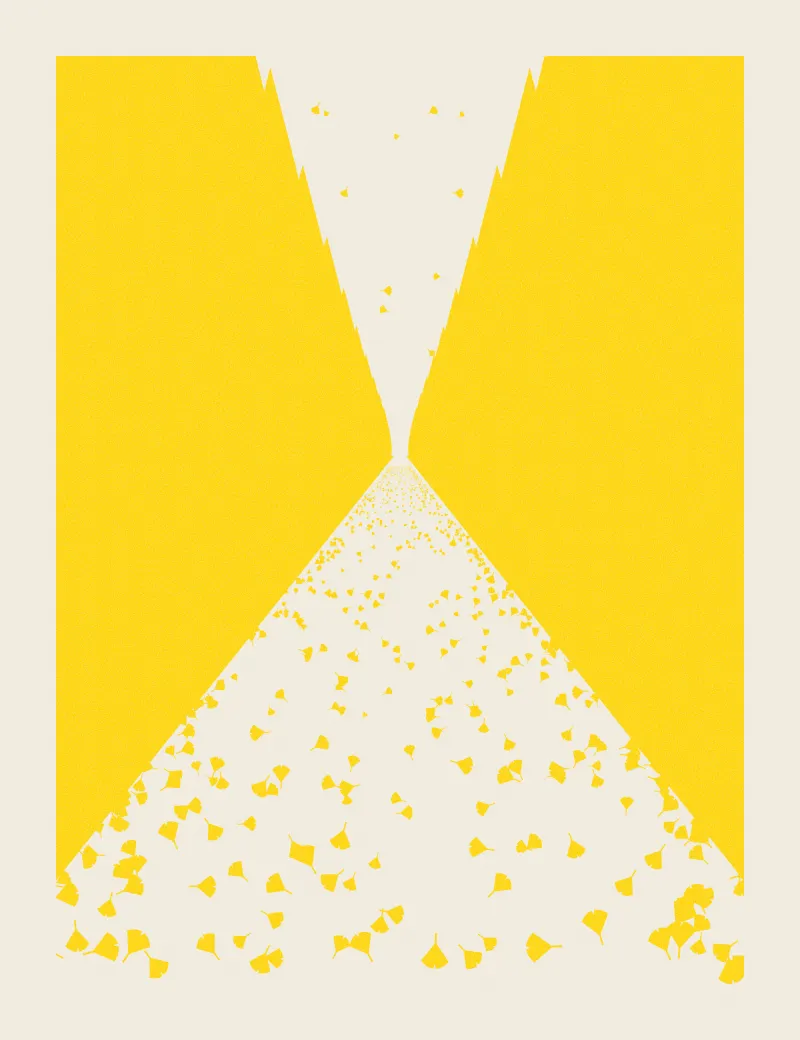
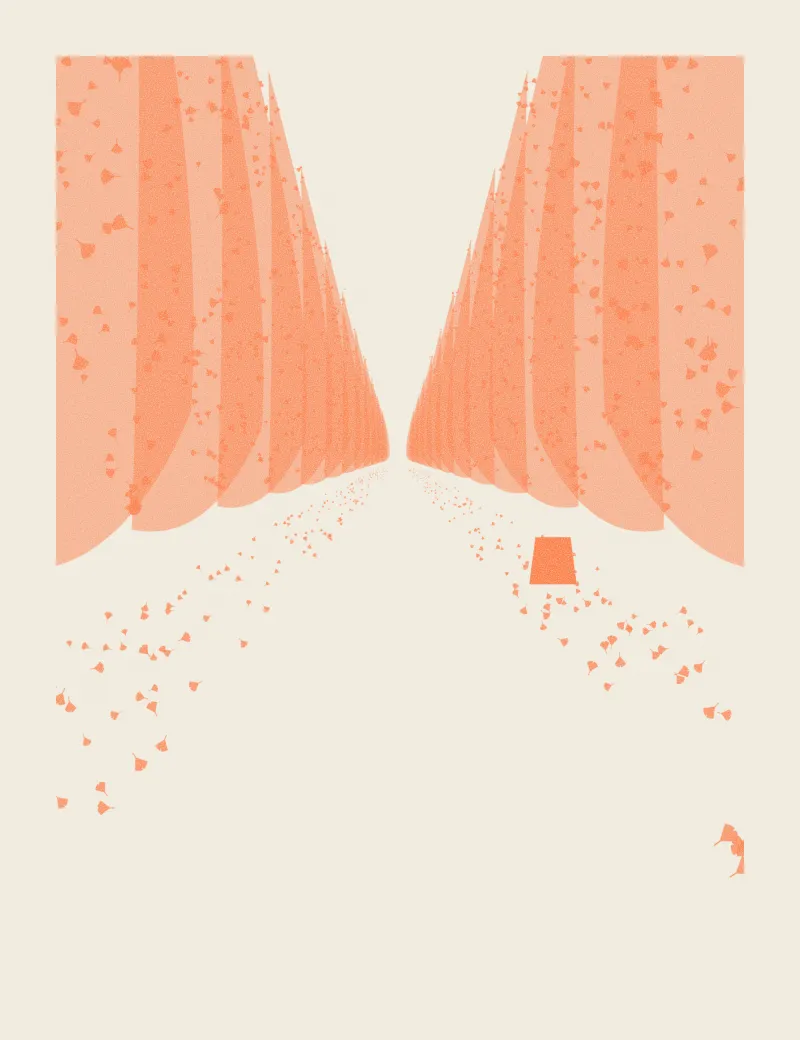
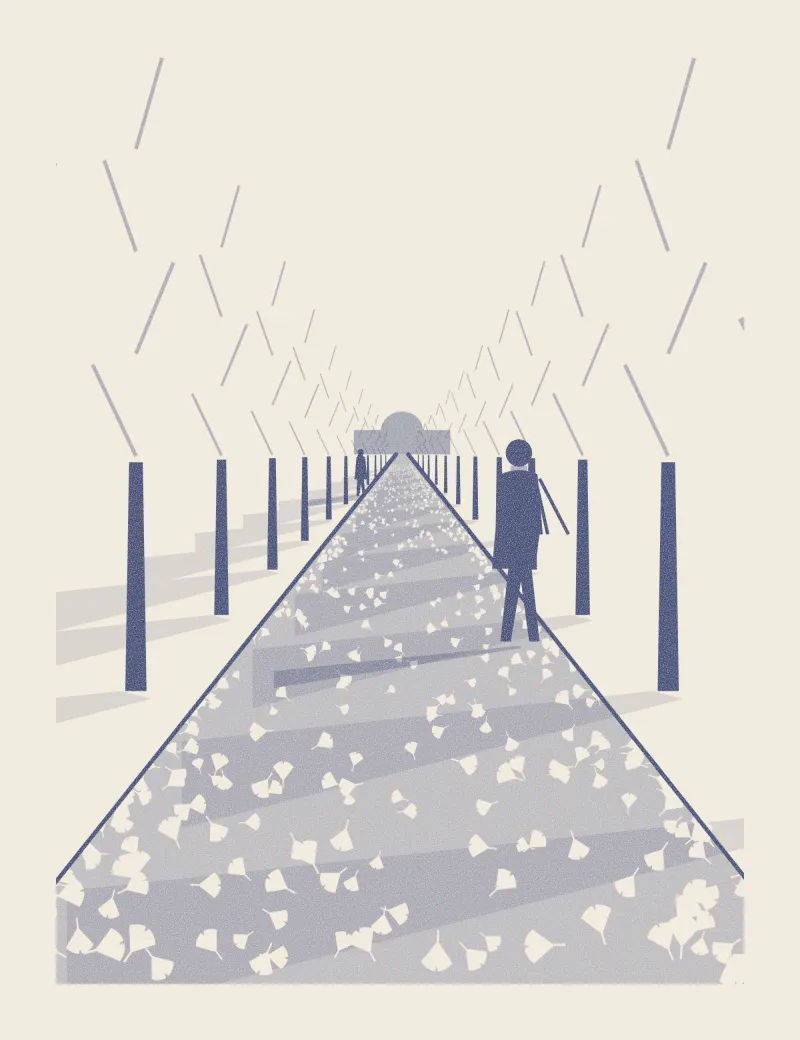
Every print is drawn as separate layers, one for each ink, all in plain black. The yellow layer of Ginkgo is the trees and the fallen leaves; the orange layer is the deeper leaves on the left and right; the midnight layer is the trunks, the road, the shadows and the walker. Where two layers overlap on paper the inks mix, so we draw the overlaps on purpose.
The yellow layer on its ownThe orange layer on its ownThe midnight layer on its own
2. Masters and drums
The machine scans one layer and burns its master, which takes about twenty seconds. We load the yellow drum, run a few test sheets until the ink settles, then print the whole edition plus about fifteen spare sheets for proofs and mistakes.
3. The second pass
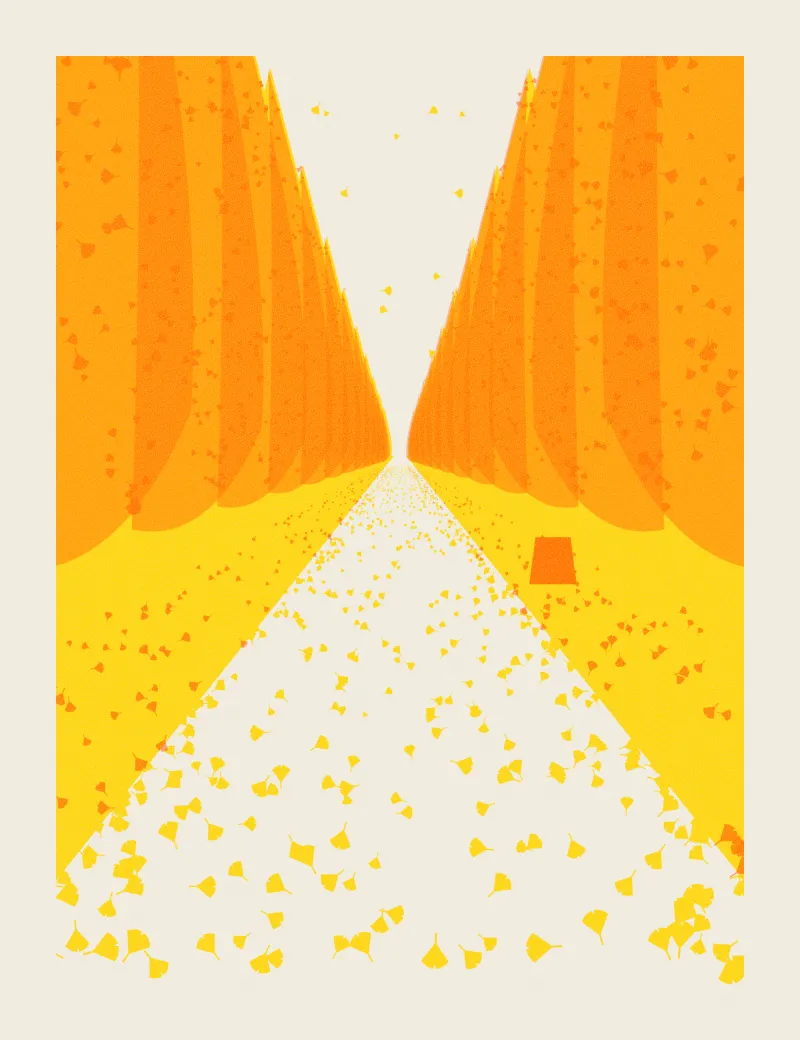
The next day, once the yellow is dry to the touch, the same sheets go through again with the orange drum. Lining the second ink up with the first is never exact: the paper shifts a millimetre or two, which is why no two sheets of an edition are quite the same.
Yellow and orange together, after the second passMidnight on top: the finished print
4. The last ink, then rest
Midnight goes on last because it carries the detail, and a dark ink hides small slips in the lighter ones underneath. Riso ink is soy based and dries by soaking into the paper, so the sheets rest on racks for a few days before anyone stacks them.
5. Sorting, signing, numbering
We go through the stack by hand. Sheets with a smudge, a crease or a badly slipped layer become seconds. The rest are trimmed, signed and numbered in pencil, and go into a card-backed sleeve for the next market.
Our drums
Nine inks so far, swapped by hand. The number is how many of our 28 prints use each one.